
Utilities can quietly add $300–$400 per month to housing costs depending on home size, usage, and climate. Over a year, that can mean an extra $4,000–$5,000 most people do not plan for.
Utilio exists because of this gap between what people think housing will cost and what it actually costs once the utility bills start arriving.
The rest of this story explains where the idea came from, what we learned watching people move, and why we think community-shared data is the best way to fix it.
Where the idea came from
During my time in the military, I saw this play out over and over again.
Service members would arrive at a new duty station, find an apartment that looked great online, and sign a lease thinking they understood the full cost of living. Then the first few utility bills would arrive, and suddenly the numbers looked very different.
The rent might have been within budget, but once electricity, water, gas, and internet were added, the true monthly cost was far higher than expected.
Many of these service members were young and relocating for the first time. They were making important financial decisions with incomplete information.
The problem was not poor decision-making. The problem was a lack of transparency.
The hidden cost of housing
The idea was not shaped only by my experience in the military. It was also influenced by conversations with family members and everyday people dealing with the same issue.
Renters, first-time home buyers, and families moving to new cities all ran into the same problem: they could easily find rent prices, square footage, and amenities online but one of the biggest parts of the real cost of living was missing.
What do utilities actually cost in this home?
People were left guessing. Some searched Reddit threads. Some asked Facebook groups. Others tried to estimate costs using utility provider rate pages. None of those sources showed real monthly costs from real homes.
Utilities can quietly add $300–$400 per month to housing costs depending on home size, usage, and climate. In cities like San Antonio, that can mean thousands of dollars per year that renters and homeowners simply do not see when evaluating housing options.
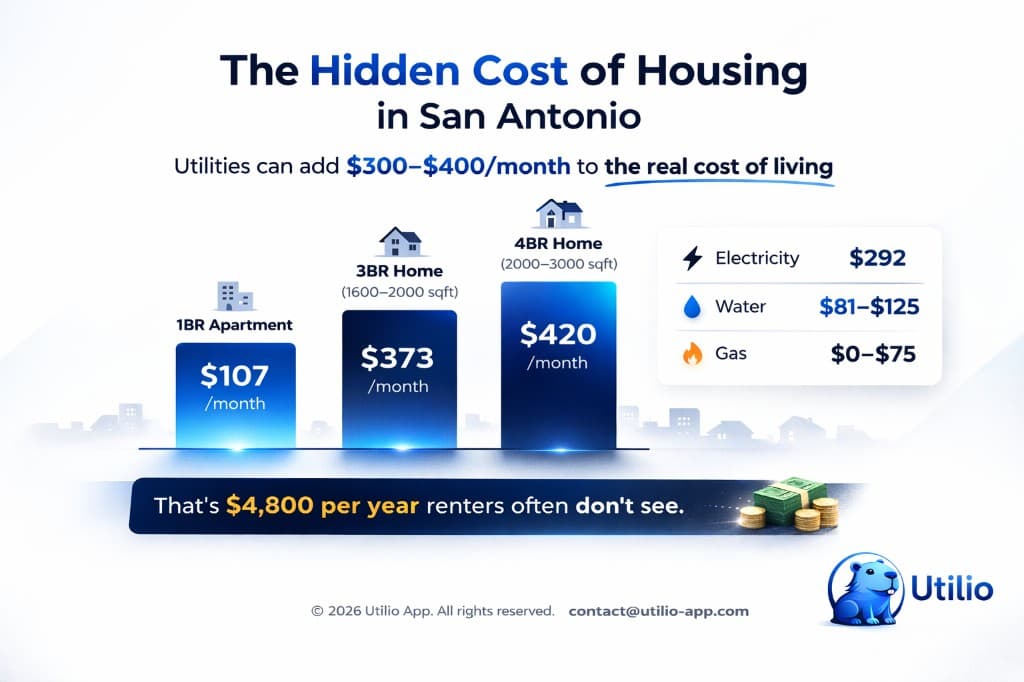
Example utility cost ranges for different home sizes in San Antonio.
Over time, those costs add up often reaching $4,000 to $5,000 per year.
And yet most housing websites still focus almost entirely on the rent or mortgage price.
Why we built Utilio
We created Utilio to bring transparency to one of the most overlooked parts of housing costs. Utilio is designed to help renters and homeowners understand the real cost of living before they move by providing better estimates and comparisons for utility expenses.
Instead of guessing or piecing together information from different forums, people can see typical utility ranges for homes in their area, how their own bills compare to local averages, and insights based on real data shared by the community.
The idea is simple: real data from real people in real homes.
Utilio is a veteran-owned project built around the idea that better information leads to better decisions.
Housing is one of the biggest financial commitments people make, and something as important as utility costs should not be hidden or difficult to estimate.
By building a community-driven platform where people can anonymously share and compare their utility costs, we hope to make housing decisions clearer and more predictable for everyone.
Whether someone is moving to a new city, renting their first apartment, buying a home, or simply trying to understand their monthly bills, Utilio aims to help people see the full financial picture before they move.
Utilities should not be the hidden variable in housing.
This is just the beginning.
As more people contribute their data, Utilio will continue to improve the accuracy and usefulness of these insights. The goal is simple: give people a clearer understanding of the true cost of living before they sign the lease or buy the home.